
Homepage





Recent updates from the Louisiana Supreme Court
- Qualifications and Standards for Attorneys Representing Children in Need of Care – 2023 Hours Due January 31, 2024
- Form to File Hours
 Adoption And Foster Care Analysis And Reporting - INTRODUCTION The Code Book for the Adoption and Foster Care Analysis and Reporting System (AFCARS) is a product of National Data Archive on Child Abuse and Neglect (NDACAN). NDACAN is funded by the Children’s Bureau, Administration on Children, Youth and … Read More
 Child Abuse Prevention Month Outreach Toolkit 2024 - National Child Abuse Prevention Month: April 2024 Whether by proclamation, through social media, with graphics, or through other means, spreading the word about child abuse prevention lets your community know they can take action to strengthen families and help them … Read More
 Child Welfare Law Specialist Certification - Child Welfare Law Specialist (CWLS) certification is a professional achievement that signifies an attorney’s specialized knowledge, skill, and verified expertise in the field of child welfare law. The specialization area is defined as “the practice of law representing children, parents … Read More
The Children’s Justice Conference (CJC) is the largest child welfare-related conference in the Pacific Northwest. The CJC provides professionals from multiple disciplines a unique opportunity to receive core and advanced training and skill development in identifying, investigating, and prosecuting child maltreatment.
You will have unparalleled opportunities to learn and network with professionals representing a variety of disciplines involved in the child welfare community.
Immerse yourself in a one-of-a-kind boutique conference experience tailored for mental health enthusiasts! Join us for a captivating journey of educational training, featuring thought-provoking topics meticulously curated and presented by industry leaders. At this exclusive event, attendees will have the privilege of hearing from premier clinicians—true trailblazers who have not only elevated the mental health field with their expertise but have also left an indelible mark through their profound influence.
Prepare to be enlightened, inspired, and engaged as we delve into the forefront of mental health advancements. This is not just a conference; it’s an opportunity to connect with the best minds in the industry, gain valuable insights, and be part of a community committed to making a positive impact on mental health.
Secure your spot now for an enriching experience that transcends the ordinary, and let the Louisiana Mental Health Conference be the catalyst for your professional growth and personal inspiration. See you at the intersection of expertise and passion!
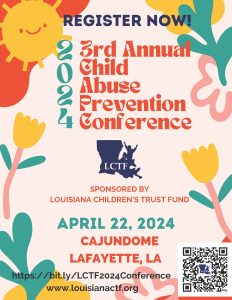
We are inviting nonprofit, community and faith-based organizations serving children and families in Louisiana to set up a table with information for attendees. The tables will be set up in a large room right next to all the breakout rooms during the conference. We will also have author tables for information from our speakers who have published books!
Register today to join us virtually for this free 13-part webinar series. Click on title below to register online. Professionals will share their knowledge and evidence-based strategies to further support children and encourage positive behavior function.
We all play an important role in ensuring children are safe, healthy and happy. Learn what you can do as a parent, youth, community member or professional working with children to help prevent adversity and promote positive experiences so kids can thrive. Join us for a conversation about how communities can support families to create bright futures for all children.
Listen, learn, and innovate with friends and colleagues in the city of Angels! This action-packed, two-day conference is centered around how we as professionals are evolving our practice to better serve children, youth and families. Join us and connect with your peers to deepen your knowledge of the latest effective practices in the field of adoption. Join us for a star-studded reception and view the lights of the Hollywood hills from the penthouse ballroom!
Register today to join us virtually for this free 13-part webinar series. Click on title below to register online. Professionals will share their knowledge and evidence-based strategies to further support children and encourage positive behavior function.
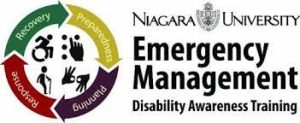
Niagara University Disability Awareness Training has received funding from the Louisiana Developmental Disabilities Council to educate anyone involved in emergency planning, preparedness, response, and recovery as it pertains to individuals with disabilities and access and functional needs. NU has tailored a presentation that identifies the responsibilities of both Emergency Management personnel and disability advocates during an emergency. This program will introduce the four modules necessary for proper response that include Disability Awareness Training, the Americans with Disabilities Act specific to Emergency Management, emergency plan content, and Inclusive Planning and Active Participation. This program is also in Missouri, Nebraska, South Dakota, and New York. This training is free of charge. Lunch is on your own.
Topics to be Discussed:
- Disability Awareness specific to Emergency Management
- Access and Functional Needs defined to include Universal Accessibility
- Understanding how the whole community concept is imperative to proper response to individuals with disabilities and how to involve them.
- FEMA Access and Functional Needs content
- Disaster Preparedness and Planning
- The Americans with Disabilities Act relative to Emergency management and response.
- Community resources and other materials that assist stakeholders and their constituents
- Inclusive Planning and Active Participation
- NYC Lawsuit and its ramifications nationwide
- Disabilities defined in the context of emergency planning
Register today to join us virtually for this free 13-part webinar series. Click on title below to register online. Professionals will share their knowledge and evidence-based strategies to further support children and encourage positive behavior function.

This symposium brings together evaluators and practitioners to share ideas, challenges, and methodologies for evaluating workforce development interventions and strategies across human services fields. For more than 20 years, the symposium (formerly known as the National Human Services Training Evaluation Symposium) has cultivated a unique learning space where attendees collaborate and support each other through constructive and respectful discussions. The symposium welcomes curiosity and a wide-range of experiences to enrich the exploration of challenges, innovative approaches to address these challenges, and new ways to approach future and/or ongoing work. Because of this environment, each year participants walk away with ideas and resources relevant to their evaluation work, as well as new and deepened relationships and sense of community.